
- The rule applied to a beam to assign its location to a given functional volume.
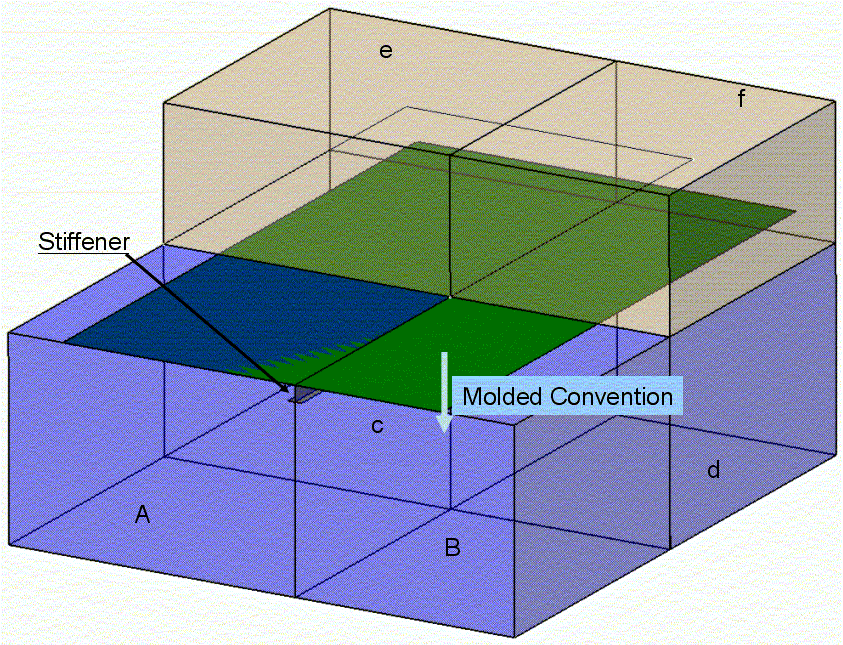
- How the confusion rule is applied to SFD objects. Confusion means when an SFD object (plate or stiffener) is on the edge surface of a Functional Volume. It is difficult for Planning Break Preparation to determine which Functional Volume the object should be included in.

Confusion Rules
Resolution of Confusion Scenario for Plates
For plates, Planning Break Preparation is supposed to use the Molded
Convention to resolve a confusion scenario.
If, the Molded Convention points toward the Functional Volume, then
Planning Break Preparation includes the plate in that Functional Volume.
If, the Molded Convention can not be found, then the plate is included in
the first Functional Volume that Planning Break Preparation processes.
Resolution of Confusion Scenario for Stiffeners
For stiffeners, the plate is always processed first by Planning Break
Preparation. So, a stiffener that is involved in a confusion scenario is
included in a Functional Volume only if its plate was included in that
Functional Volume.
Beam and Pillar Rule
In order to assign a beam/pillar in a functional Volume, the system determines which functional volume most of the beam/ pillar is located in. Then, the beam/pillar is assigned to the functional volume that validates the test of inclusion.
