
Try to apply constraints with values of the same order of magnitude as the objective function. This will prevent a constraint from being over-considered by the optimization process.
The solution distance option used in constraint satisfaction results takes its meaning if and only if at least 2 solutions are sought.
This option ensures that the distance (Maxi (xi-yi)) between the two solutions is not less than the value specified by the option.
In the case of more than two solutions, the distance considered is the
distance between the current solution and all previously found solutions. The
distance between two solutions you want to compare is the MAX of the
absolute value of the difference between the parameters computed by the
Constraint Satisfaction.max (|x1-x2|, |y1-y2|, |fxy1-fxy2|)
|
|
To have meaningful results regarding solution distances, it is recommended that you formulate the problem you want to solve using parameters having same dimensions. The solution distance must be formulated in MKS unit for this dimension. |
Example of "solution distance" impact on the results:
| Problem set up: | Formula.1: fxy = x*x + y*y CST.1: fxy == 25; |
| First trial
for options: Results options: Number of solutions: 100, distance between solutions: 0.02. Options: Precision: 0.001 Solutions found: around 50000 (due to precision) among which 100 satisfy the distance specified. |
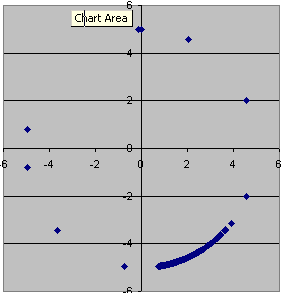 |
| Second trial
for options: If the precision and the distance between solutions are increased, the span of the solutions increase (due to a larger distance between solutions) and the computation time decreases (due to less precision). Results options: Number of solutions: 100, distance between solutions: 0.15. Options: Precision: 0.1 Solutions found: Around 1700 (due to precision) among which 100 satisfy the distance specified. |
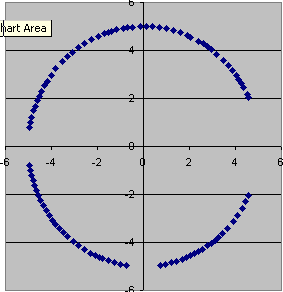 |